Tuesday, 25 February 2014

How to make customers feel like they are getting VIP treatment on Social Media

In the lightning fast world of Social Media, a customer complaint can tarnish a company's reputation, but on the flip side a customer compliment can make sure your company is the brightest star in the networking skyline.


In contemporary society, success for a company derives from the result of being very customer-centric. With this in mind customers can interact with rival companies at any time of the day or night through email or any of the available social networking resources online. This requires companies to push their brand, and make their existing customer database feel special whilst reeling in new customers who see the acts of benevolence. This is why customer relationship management is now re-focusing on social media, because if a company is not on a social media networking site, it doesn't mean they aren't active, but their customer database is in this big pool of fish, whilst other firms cast their rods into the water.

Social Media allows companies to build strong relationships with their customers, and with this 5-step guide, your current customer database will feel as if they are fit for the consumer red carpet:

1. Reply: A reply in the world of social networking does not just mean entering in direct dialogue with a customer anymore. A customer will feel very appreciative of a simple “Like” or “retweet” and although this is associated with a positive interaction, companies can also make their customers feel special off the back of a complaint. Various complaints appear on the official pages of big companies on the likes of Facebook and Twitter, and acknowledging that they are being dealt with personally will go a very long way. It gives the customer a sense of human sympathy in a world where a lot of companies tend to avoid this type of contact.

2. Enter the Blogosphere: Connecting with customers on an official company blog will create a sense of community amongst everyone in connection with the business. This may be to explain a certain idea that the company is looking to take to the market, or to ask for feedback on a current product/idea. Most people gather the impression that companies are corporate machines that run in a way that doesn't take the customer in to consideration at all, but by being in direct dialogue over the internet, this assumption will change very quickly.

3. Exclusive deals for repeat customers: Posting exclusive deals online are a way to blast a company into the headlines as good deals circulate very quickly. A good way of making current customers feel special is to offer them exclusive deals via social networking. Not only do the current clientele show gratitude, and let their peers know about this great offer, their peers will then want to commit to the company in order for their brand loyalty to be rewarded with this kind of deal once again.


4. Share informative content: The whole reason of businesses utilising social media is to push the brand to a new level, but there is a need to entertain over the web, as there is a requirement to keep people interested in a world of high modernity. This means that the content shared on the likes of Google+ and Twitter needs to be informative and customer friendly. These include tips on using a product supplied by the company, industry news and customer case studies. This will make your customers know they have invested in an intelligent and worthwhile brand, and in turn this will make the customer feel good about themselves as there will be a sense of accomplishment.

5. Say Thank You: This is the simplest yet the one which strikes at the heart of an individual. Social networking has led the working industry to be more intricate in its dealings with customers online, but sometimes a simple thank you is all that required to put a smile on a customers face. Show gratitude that they have invested in the company and word will spread that the company is a one worth committing to as a consumer.

These 5 steps will go a long way in ensuring that not only will the existing customer database will feel special, but also new people will be attracted upon seeing that the firm is driven by the happiness of its customers.

In an age where we are undoubtedly children of the social networking phenomenon, it is crucial for companies to make sure that they use these tools in order to please its clientele whilst attracting the attention from potential new customers.

Sunday, 23 February 2014

Content Marketing With Real World Events

Conferences, symposiums, summits, trade shows, roundtables and world expos. From intimate, invitation-only events to sprawling Las Vegas-style exhibit halls, most of us have attended at least one industry-specific event.

While the business value has been debated off and on over the years, and it was predicted that webinars and other digital forms of online training would eventually replace live events, there is just no substitute for face time when you want to establish rapport with people who share your interests and business goals.

As content marketing strategy continues to gain momentum, an interesting phenomenon is occurring – real-world, in-person events are starting to edge out trendier content tactics, like video. In fact, according to Content Marketing Institute, in-person events have been ranked as the most effective marketing tactic over the past four years by B2B marketers.

This should come as no surprise when you consider all the pre- and post-event marketing opportunities.

The ability to deliver information in a variety of formats makes real-world events a content marketer’s dream. All it takes is some planning and an understanding of your target audiences preferred consumption patterns.

Content marketing channels around an industry conference or trade show abound, from pre-event storytelling through interviews and articles written by speakers in advance and from live blogging to creating social media advocates during and afterward.


Optimize and Amplify: Stealing a Page From Lee Odden’s Playbook:

Regular readers of this blog know how generous Lee is with sharing his online marketing expertise. Often, he takes this one step further with a play-by-play of tactics he employs to get the most ROI from many content marketing tactics.

Last year, preceding Content Marketing World’s annual conference, he laid it all out for readers, whether you were attending, speaking or sponsoring. We’ve republished his tips here:


Before the event:
  • Write headlines, descriptions, tags and make trackable short URLs.
  • Pre-write tweets, updates and decide on a hashtag.
  • Submit your session to event listing sites; create events on Facebook and LinkedIn.
  • Create a contest or buzz around your presentation to inspire others to tell their networks.
  • Issue an optimized press release.
  • Schedule interviews with media attending the event and/or local media.
  • Connect with other speakers in advance.
  • Create a teaser for your presentation.
  • Announce your event attendance through email and your social channels.
  • When you meet people before your presentation, don’t be shy about sharing when you are speaking.
  • Create a check-in notice on Foursquare inviting people to attend your session.
 During the event:
  • Create content the audience can participate with. I like to take photos of the audience and post. to our Facebook page so they can tag themselves.
  • Use tweetable, shareable content in your presentation.
  • Give something away to motivate desired behaviors like asking questions.
  • Always include a report or fulfillment piece in your thank you page.
  • Have someone on your team monitoring tweets and buzz during your presentation. Interact as appropriate.
 After the event: 
  • Curate buzz about the presentation into a blog post and/or newsroom post.
  • Follow up on questions asked and fulfillment deliverables.
  • Connect with new contacts through appropriate social channels.
  • Thank the conference for having you.
  • If you were on a panel, thank the panelists and moderator.
  • Thank any live bloggers that covered your session.
  • Use media coverage from the event in your newsroom, corporate email and other communications.

Pros of Real-World Events:

  • Builds your brand
  • Establishes thought leadership
  • Inspires confidence in your employees
  • Cited as a primary source of qualified B2B leads.
  • Drives social media engagement and amplification
  • May garner attention of mainstream media and industry bloggers

Cons of Real-World Events:

  • There are costs involved: travel, event attendance fees
  • Time to plan and/or attend may be make it hard to justify ROI
  • Perceived as a sales tactic and not part of an overall content marketing strategy

What the Marketing Experts Are Saying:

“As event marketing naysayers continue raising this channel’s disadvantages, more than 4 out of every 10 B2B marketers are tapping into the opportunities from event-based prospecting.” Business 2 Community
“92 percent agreed that experiential marketing builds brand awareness and brand relationships.” Destination CRM
“A total of 84 percent of the event marketing executives surveyed believe events and experiential marketing are either ‘very important/critical’ or ‘important’ to their organizations—and driving this perception are sales and revenue.” Expo Web
“When asked to list the top three marketing elements for accelerating and deepening relationships, event marketing led at 64 percent, followed by social marketing at 55 percent and Web marketing at 54 percent.” Event Marketing Institute

Real-World Event Content Marketing Examples:

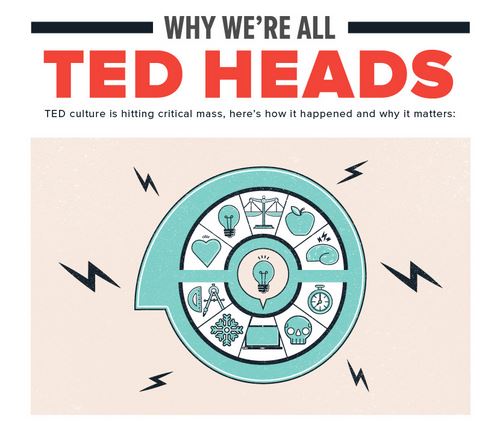
Ted Talks

 Ted Talks grasped the power of content from the start, as evidenced by its mantra: “ideas worth spreading.”
Ted Talks Infographic
  •  They have developed and executed one of the most highly integrated content platforms around
  • Not only does each Tedx showcase their brand, it also establishes its equity and delivers on its brand promise
  • At 150 million and growing, they’ve attracted one of the largest army of brand evangelists in the world. See this infographic.
Apple

 Apple is another early advocate of face-to-face events, understanding how the tactic would showcase their content.


Apple Live Event


  • Seen as the lynchpin of their marketing efforts, eagerly anticipated by management and experienced by every employee in a standing-room-only cafeteria
  • It’s not just an event but also a golden marketing opportunity to engage and sustain his target audience
  • Steve Jobs personally oversaw the content strategy, content creation and integrated marketing efforts to forge deeper, more sustained connections with an audience of both consumers and employees.
Photo credit: Creative Commons


Guidelines for Content Marketing With Real-World Events:

Even if you’re not as big a brand as Apple, you can create powerful content marketing from your organization’s own events or from those you attend. Here’s how:


Record the speaker’s presentation at the event. Most conference organizers are set up for audio, but, as a backup, travel with your own microphone that you can connect to your own digital recorder. Content marketing output: white papers, articles, blog posts, podcasts


Tip: Post the original text transcript along with the audio files, so that the keywords appearing in the content is discoverable through search engines.


Capture the presentation on video. Break down the video into its most relevant highlights. Content marketing output: Create a demo reel and post on website or blog.


Send it to relevant industry thought leaders and journalists. Post on YouTube. Take a still screen shot and use it on your social media profiles establishing yourself as a thought leader and letting your connections know you’re on the speaking circuit.


Tip: A wireless microphone synched to a pickup on the camera will produce a better sound than the camera’s microphone.


Create a graphic representation of the talk. Repurpose the slide deck as a stand-alone, such as a SlideShare presentation which can also be posted to your LinkedIn profile to demonstrate your expertise.


Tip: Include diagrams, photographs or other images that will add clarity to the presentation, since information shared outside of the original context may be confusing. Graphics can also help break up long blocks of text.


Create engaging emails about the event. Whether it’s your company owned event or one you are speaking at, giving event details a prominent spot in your email content will help drive attendance and engagement.


Tip: Plan for event-related content after the conference, such as follow up posts, news mentions, satisfaction ratings or pictures of attendees to generate excitement for your next event.


Treat your speaking calendar as content. Posting event listings where you will be speaking either in an online calendar or as a graphic on your website gives prospective attendees an idea of the content you will be delivering at the event. At the same time, you can show clients or prospects the rich variety and robust quantity of events listed, further establishing your expertise.


Tip: Treat event listings as you would any other piece of content: optimize them for search and
announce them across multiple platforms. Include structured data on your events listing page to leverage rich snippets in Google.

The power of attending or hosting real-world events transcends their content marketing value. Meeting people in person adds richness to your online relationships, exposes you to new clients and can lend itself to establishing new alliances.

All businesses have the opportunity to create a content platform and use events to extend and deepen customer engagement. This is the real value and ROI of events.
http://www.toprankblog.com/2014/02/real-world-event-content-marketing-opportunities/

Tuesday, 18 February 2014

How To Gain Followers And Make Money

Many online businesses feel Social Media is this big enigma that needs to be cracked, that there’s some kind of secret to it. The truth is; Social Media is just loads of people on the same platform. But why on Earth would anybody actually want to follow or like a business page?


Well I recently had an idea on Twitter for ecommerce sites that puts everything in perspective.

Why Do People Follow?

It’s not really a difficult question to answer. Human beings, for all our complexity and mystique, boil down to a set of rules and values in almost any situation. In the Twitter situation, people follow something or someone because it gives them something – entertainment or news or fast and free communication with friends.

I often see “please like our Facebook page!” or “Follow us on Twitter!” plastered on website banners, on the side of vans driving down the street and on shop windows. And all I can think is: why? People don’t just arbitrarily follow things because you tell them to. You’ve got to give something back. All relationships work on give and take – including the ones with customers.

How To Get Followers And Turn Them Into Customers

So, here’s my idea. If you’ve got an online shop, you’re naturally going to be selling stuff that people want. But the problem is, you’re not the only one. Getting found via search doesn’t necessarily mean a guaranteed purchase – some people like to shop around.

Ah, but what if you make them an offer they can’t refuse?

All you’d need to do is make yourself a new page header or banner with some nifty stuff in it! I’ve mocked up the example below, using a fake retro sock and shoe shop called TwoFeet. This post is focused on Twitter followers – but, because you can technically do this with Facebook page likes too, I’ve included it in the mock up:


TwoFeet Website Mock-Up


Note a couple of things: firstly, my INCREDIBLE design skills (I drew that sock on MS Paint freehand, believe it! And who doesn’t like rainbow text?! Richard of York, probably…). Secondly, the big, colourful “10% OFF!” under the social buttons. Obviously, use a layout and design that fits (I went with a lo-fi, 8bit feel for my throwback shoe website) but make it a prominent feature and promote it where necessary.


Shoe Website Pop-Up Mock-Up


To be extra helpful, TwoFeet could apply the code to the user’s basket automatically if their ecommerce platform allowed it. And it doesn’t have to end here. Once the customer has finished, you can give the option to share their purchase via tweet or Facebook status update – and receive a free gift or code for their next purchase! That’s how you get a first time customer to love you, tell all their friends just how much they love you – and then come back for more another day. There are no losers!
You’ll notice that TwoFeet has an email signup option for the less social among us. The worst thing you could do is alienate your audience because they’re not on a particular platform. But if they are shopping online, they must have an email address – so give all email signups a discount code too! Nobody gets left out and you always capture that second chance to win them back – via social or email.

Make it more tempting to use all your platforms by letting the user get a code for each – you can limit the number of vouchers per transaction to one, but let them keep a hold of the code for their next visit – or better yet (and more on this later) share it via a social media channel with a friend.

How To Keep The Follower As A Customer

Keep sharing, but stay close to what you do. Be human, talk to your fans and remember to say thank you! Keep giving them a reason to follow you. TwoFeet is most likely going to be a place for shoe lovers, so their social content is largely going to consist of awesome shoes. Fashion blogs, photographs and promoting their own stock would serve well in this situation.


You can keep your audience entertained and enlightened with this stuff. Don’t overwhelm, overshare or alienate – that’s more likely to get you unfollowed! If your audience would like it, then share it. If it’s purely a self–serving promotional tweet or post, people will see right through it. So try to limit those things if you can – but if you’ve got any more offers, then share away with a link to the deal and a photo of the product.

Why It’s Beneficial

The ecommerce playing field is by no means level. A small token gesture means a new fan and a sale you otherwise might not have got. That then gets shared. Every new customer gets the same opportunity. Twitter followers grow, Facebook fans grow, your customer base grows – you get a name for great service, great deals and forever open yourself to new customers with every like, follow and email sign up. That’s the value for your business.
Getting those customers to make their first purchase from you is a huge battle – but once you’ve got them on board, they could potentially be a customer for life. Think about what makes customers return to the same places over and over again – customer experience, price and convenience will lead.
If you can give them that great initial experience, an offer they can’t refuse AND make it convenient for them to come back, then you’re making things a whole bunch easier.
The knock on effect of all this social activity and buzz is the healthy growth of natural links and social signals, pushing your site’s search engine visibility.
Great Social Offers

To keep the social media fire alive, you can use Twitter to make the act of giving fun and easy. Remember when @tweetacoffee launched? It’s a simple idea, but it’s amazingly effective. It only works in the US and Canada as a beta version right now, but there’s nothing stopping you and your site to adopt a similar promotion.

Users buy their friends or family a virtual gift card and tweet it to each other – but with a verification process to make sure the right user gets the gift card. This public giving is an appealing trait that people will want to display, strengthening your brand in the process.

For example, TwoFeet could let friends and family tweet socks to each other as a gift at Christmas – it’s the perfect campaign that combines two things that go hand in hand (Christmas and socks that is).

Read more here:
http://www.koozai.com/blog/social-media/twitter-for-ecommerce/#more-205946

Saturday, 15 February 2014

How To Market Yourself As A Brand

I was inspired to write this post today by a particularly (and let me stress unintentionally) narcissistic morning in which I created a new facebook page for my solo acoustic songs. The page was (for obvious reasons) called David McSweeney and after uploading a profile pic and cover photo I invited my facebook friends to like it. What I forgot was that this would cause facebook to send them all an email with the following text: -
‘David McSweeney has invited you to like David McSweeney’
Man, did I sound self indulgent or what? I got a few sarcastic texts and emails from my close friends and spent a good ten minutes or so cringing. And then I thought about it…
Marketing yourself as a brand is exactly what you have to do to succeed in online marketing these days. In fact it’s a key factor in the success of any business. Allow me to explain…

People Like To Deal With People

English: Steve Jobs shows off the white iPhone...
Mr Apple: The late, great, Steve Jobs (Photo credit: Wikipedia)
The days of the faceless corporation are over. Everyone hates the banks. Everyone hates the energy companies and their fixed pricing. So what about a company that (mostly) everyone loves? Well, how about apple?
What do you think of when you think about apple? I’m sure one of the first things would be the late, great, Steve Jobs. Steve Jobs was just as important in the success of the Company as the technology was.
Think of apple you think of Steve Jobs. Think of Steve Jobs you think of apple.
Steve Jobs was the face of the brand – in fact, in many ways he was the brand. Consumers trusted Steve, they believed in what he had to say and, because of that, they believed in and trusted apple as a Company.
And the fact that apple became the biggest Company in US history last year tells you all you need to know about what that trust means for your business.

A Lesson From History

The Emperor Napoleon in His Study at the Tuile...
The Emperor Napoleon in His Study at the Tuileries, by Jacques-Louis David, 1812 (Photo credit: Wikipedia)
What do you think of when you think of the post revolution french empire? I am pretty sure the answer would be Napoleon and, in many ways Napoleon is the ultimate example of how to market yourself as a brand.
Such was the French people’s trust in Napoleon, that they elevated him to an almost messianic state and, while in that age of empires there were obvious patriotic reasons for the people’s wish to expand their countries influence, it was their belief in Napoleon the man that caused the incredible expansion through Europe in such a short period.
Don’t believe me? Have a read at this article and think about how Napoleon managed his image and was able to manipulate public opinion. I’m betting he would have had a phenomenal twitter following.
The Company was France, the consumers were the citizens of the newly formed French Republic and the face of the brand was Napoleon.

Closer To Home

Ok, that was quite a radical example, so I’ll bring things back to the world of the internet (and particularly blogging) for a minute and give you 3 examples of bloggers from the SEO community whose names are synonymous with their brands.
Brian Clark / Copyblogger
Rand Fishkin / Moz
Ann Smarty / MyBlogGuest

The principal is exactly the same as with apple – they are real people, they are active on social media, they have real opinions, people trust what they have to say and, therefore trust their websites/brands.
Ok, so how do you market yourself as a brand?

Consistency

One of the most important elements of branding is consistency. When you think of a business you will think of a logo, a corporate colour scheme, a font style perhaps. But how does this apply to you as an individual?
Well, first things first, make sure you use the same photo in all of your online activities. Here’s a quick checklist of where your photo is likely to appear: -
  • Your facebook profile
  • Your google+ profile
  • Your twitter profile
  • Your linkedin profile
  • At the top of your blog posts
  • Any time you post a comment on another blog (if you haven’t got a gravatar, get one)
  • Your guest posts
  • Your avatar for any forums you are registered on
In fact, let’s think of your photo as your logo. So, we have a logo… next…

Say My Name

P.T.Barnum famously said ‘I don’t care what you say about me, just spell my name right’ – well, let’s take this on board and look at the times you should use your real name when promoting your business online.
Blog comments – any time you are commenting on a blog use your full name. Don’t use your brand name. Don’t use your keywords. Don’t use my name @ my brand. Just use your name! Got it?
Twitter – if you are a blogger, my advice is to use your real name and use your brand as your handle. For example, my tweets say David McSweeney and my twitter handle is @top5seo. I’m associating myself with my brand and people can see I’m a real person. I’m not a ro-ro-ro-ro-ro-ro-bo-bo-bo-ttttttt….
For larger companies, you might want to use your brand name, however, to keep that human touch add a ‘tweets by @name of person’ in the bio.
Your blog posts – blog posts should be by a person, not the name of the site and definitely not by admin. There should also be a nice smiley picture there as pointed out above.
Your guest posts – use your real name linked to your google+ account. Again associate yourself with your brand, i.e. ‘this article was written by David McSweeney from Top 5 SEO’
Oh, and be consistent with your name, i.e. I’ll always post as David McSweeney, not Dave, Davie, Dava or any other combinations. Remember, we’re creating a brand round your name – nike doesn’t have a nicname does it?!

Find Your Voice
I’ve referred to this in previous articles, but another important aspect of branding yourself is writing with a consistent voice.
I write about a wide variety of topics, but I would hope that someone reading my articles would recognise my narrative style. In fact, I had a comment on one one of my guest posts recently which said ‘David! I should have known!’. This was a good indication that there is a consistency in my style, which is all part of my personal branding.
Read more: http://www.top5seo.co.uk/brand-yoursel/#ixzz2tOwVyS00

Tuesday, 11 February 2014

6 Killer Video Marketing Tips To Spruce Up Your Online Marketing Strategy

6 Killer Video Marketing Tips To Spruce Up Your Online Marketing Strategy

Video marketing is one of the most overlooked forms of online marketing. Some businesses are simply ignorant about the benefits of this method, while others find it to be a daunting task. However, creating videos is not as complex as it may sound. With a minimal budget, any business can produce quality videos for promoting their products and services. Here are some tips which can help you make the most of your video marketing campaigns.

1. Post on YouTube

When it comes to video marketing, the first place to start is YouTube, the most popular video sharing site which is owned by Google. All you need to do is setup a YouTube channel for your brand and then you can begin posting videos. Make sure the channel is branded appropriately using your logo, official colors, or brand name. Write a catchy description which includes keywords that are relevant to your industry or niche. If your videos are properly optimized, they will rank well on Google and will also enhance the ranking of your site.

2. Write great titles

Titles are not only vital for your site pages, but also for your videos. A great title will not only attract the attention of your audience, but will also enhance the ranking of your video. Therefore, take time to think of a title which is descriptive as well as creative. Make sure the title includes a relevant keyword phrase which appears near the front. You could also consider including your phone number in the title. This will allow customers to contact you even without having to watch the video.

3. Transcribe your videos

One of the best ways of optimizing your videos is by transcribing them. You can get your videos transcribed professionally for as little as $1 a minute. Once the transcription is complete, you can upload it on YouTube as a transcription file. In addition, you can add excerpts of the transcription in your video descriptions. You could also consider re-purposing the transcription into a blog post or a series of posts.

4. Include a link to your site

After watching your video, many people will require more details before they buy your products or services. It is therefore very important to include a link to your site or landing page within your video description. This can be a very effective way of converting your visitors into customers. In addition, directing traffic to your site is also likely to enhance its ranking in search engines. Don’t forget to also add a citation to your description. The citation should list your business name, telephone number and address as they appear in all your other profiles online.

5. Backlink to your videos

Backlinks are as important for videos as they are for web pages. Creating backlinks to your videos can be a very effective strategy for enhancing their search engine ranking. Therefore, whenever you write blog posts and articles, be sure to insert links to relevant videos. However, your focus should not be on quantity but quality. Make sure your links only appear in credible and well ranked sites. In addition, remember to share links to your videos in various social media networks.


6. Self-host your videos

Instead of hosting your videos on YouTube, you could consider hosting them directly on your own business site. This means that when your video appears in search engine results, the link will direct users to your site instead of YouTube. Self-hosting your videos will allow you to engage your visitors more effectively using calls to action and relevant information. Since there are no other videos competing for their attention, it is easier to convert visitors into customers.


http://www.creativeguerrillamarketing.com/social-media-marketing/6-killer-video-marketing-tips-spruce-online-marketing-strategy/